 Judaism 101
Judaism 101
Judaism 101
If you're looking for the Jewish holiday that occurs arount Christmastime, you want Chanukah, the festival of lights.

Christmas is not a Jewish holiday. Many Christians think of Christmas as an American holiday, a secular holiday or a cultural holiday, but most Jews today do not think of Christmas that way. According to the 1990 National Jewish Population Survey, 82% of Jewish households never have a Christmas tree (and the idea of a "Chanukah bush" is mostly a joke, not anything anybody takes seriously). A 2013 Pew survey found that less than a third of Jews have a Christmas tree, and most of those are intermarried. Even among those who are intermarried, only 71% had a Christmas tree, far less than the 90% of Americans who celebrate Christmas. A 2007 survey by InterfaithFamily.com found that only 38% of interfaith families that have decided to raise the children Jewish have a tree in the home. It has become a cliché to talk about the "December Dilemma," the problems that Jewish parents face when their children become jealous of the presents and the fanfare of Christmas, or when interfaith couples must decide what to do for the December holidays.
Many Jews (even highly assimilated Jews) are uncomfortable about Christmas. We don't mind other people celebrating Christmas. We aren't offended at a good-natured "Merry Christmas!" (although it may not give us the same warm-fuzzy feeling that you get). We don't mind the festive lights (although please, turn them off before midnight, I'm trying to sleep…). We don't object to the Christmas music playing 24/7 in every public place and many radio stations (although I find other things to listen to). And we're more than happy to share your cookies and candy (as long as it's kosher). Enjoy the holiday to your heart's content; just allow us to refrain if we choose to. We don't particularly want to celebrate it ourselves, and there is enormous social pressure to celebrate Christmas whether we want to or not. One Jewish writer said it's like being a man in the lingerie department: you feel like you don't belong there. Another Jewish writer said, "just try telling a Christmas enthusiast that the creche in front of your post office makes you uneasy; suddenly, 'frosty' describes more than just the snowman." Many secular Christians have told me that Christmas is my holiday too, and some of them get very angry or even nasty when I tell them that I don't want to celebrate it, calling me "Grinch" or "Scrooge."
So if Jews don't celebrate Christmas, then what do we do on December 25? In some years, Christmas overlaps with Shabbat, in which case you can always go to synagogue! We shouldn't be doing anything on Shabbat anyway! Christmas overlapped with Shabbat in 2020 (Christmas night was a Friday night) and 2021 (Christmas day was a Saturday), but this wont happen again for a while: Christmas will next be on Shabbat in 2027 and 2032. But even when they do overlap, synagogue isn't an answer for everybody, because a lot of Jews don't observe Shabbat and many don't even belong to a synagogue. So what do we do?
It's tough to find something to do on Christmas, because just about everything is closed, rather like the early days of the 2020 pandemic! Except on Christmas, even the grocery stores are closed! But here are a few of the more popular Jewish December 25 activities in normal years:
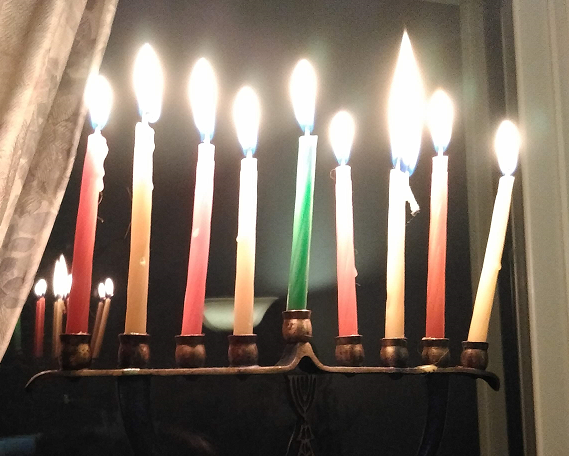 Chanukah